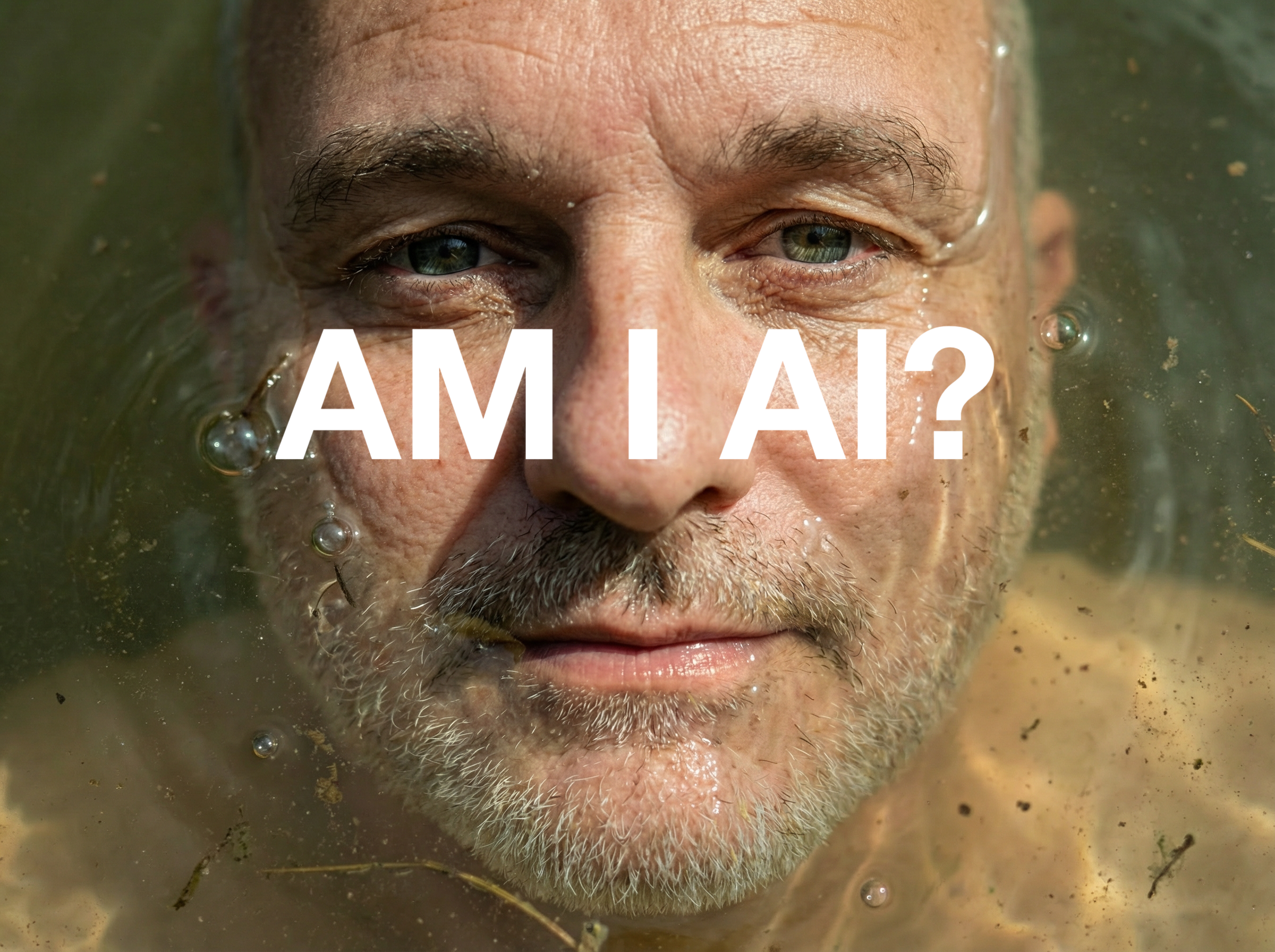
AM I AI - according to the new EU AI Act ?
This portrait started as a simple selfie taken on my phone. I uploaded it to Nano Banana 2, where water was added around me, and then Magnific for upscaling.
So what is it now? A photo? AI? Something in between?
I created the image of myself lying in muddy water because this is exactly where many brands are about to find themselves.
MUDDY WATERS
The new EU AI Act introduces transparency rules for AI-generated or AI-manipulated content. The intention is good. But when you read the actual wording, interpretation quickly becomes difficult.
Article 50 states:
“Deployers of an AI system that generates or manipulates image, audio or video content that appreciably resembles existing persons, objects, places or events and would falsely appear to a person to be authentic or truthful shall disclose that the content has been artificially generated or manipulated.”
Words like manipulates, appreciably resembles, and appears authentic are not clearly defined. For modern production workflows—where real photography, AI generation and AI enhancement are combined—the line is not always obvious.
WHAT WE RECOMMEND
Until the market and regulators settle on practical standards, our recommendation to brands is simple: go the extra mile with transparency. Label the content, document the workflow, and be open about how the image was created.
THE SHORT-TERM PARADOX
The irony is that this may not help the end user very much in their everyday life. If companies take a cautious approach, almost everything could end up being labeled as AI-generated or AI-assisted. That risks creating the opposite problem: too many labels and very little clarity.
WHAT BRANDS SHOULD DO
I am not a law firm, and I don’t claim to be an expert in interpreting the EU AI Act. But if you work with AI in marketing, it may be wise to involve your legal advisors early and let them help you navigate the muddy waters ahead.
We’re happy to help brands encode their marketing content using standards such as Coalition for Content Provenance and Authenticity (C2PA) where SCENES has been a member since 2024, or SynthID (Google’s watermarking technology), so the origin and editing history of images can be documented.