
Your product sits on a carefully designed website. The photography, typography, copy and surrounding content work together to communicate what your brand stands for. Every detail helps explain why someone should choose you.
Now imagine that product appearing alongside eight similar alternatives, each inside the same small box. The website is gone. The campaign headline is gone. The story you carefully built around it has been reduced to an image, a few details and whatever the platform decides to highlight.
Would someone still understand what makes your brand different?
As more product discovery happens through AI search, this is becoming a practical question for anyone responsible for brand content. Your assets increasingly need to communicate beyond the environment you created for them.
Your product. Someone else’s presentation.
AI search platforms are building their own ways of helping people discover, compare and choose products. ChatGPT already presents shopping results with imagery, product details and purchase links. It can simplify product titles and descriptions, add its own feature labels and summarise reviews. Your content becomes an input to a presentation shaped by the platform and the customer’s question.
Google adds another dimension. Building on Lens and Image Search, its AI Mode combines visual search with Gemini’s ability to interpret images. Google describes a system that can recognise subtle details and secondary objects alongside the main subject, then use those observations to explore relevant results. The product’s surroundings can become part of what the system searches for.
The implications for brands extend beyond appearing in a search result. You also need to consider what survives when your content is selected, condensed and placed beside competing offers.
GEO, or Generative Engine Optimisation, focuses on helping content become discoverable and accurately represented in AI-generated answers. But visibility alone does not solve the creative challenge. A customer might find your product without encountering much of the brand story that gives it meaning.
You still control the assets you create. You have less control over the context in which people encounter them.
When the product travels, the brand should travel with it
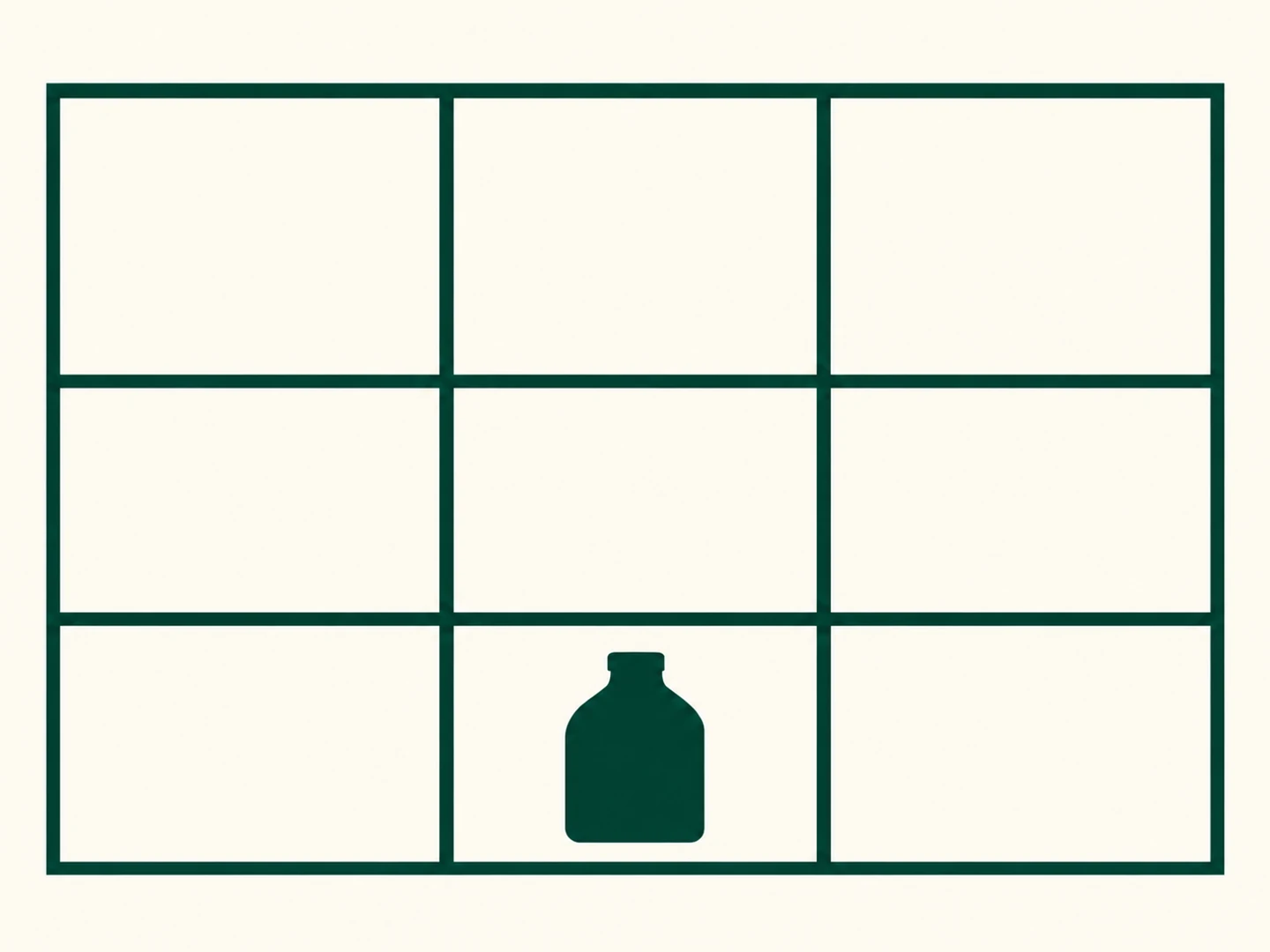
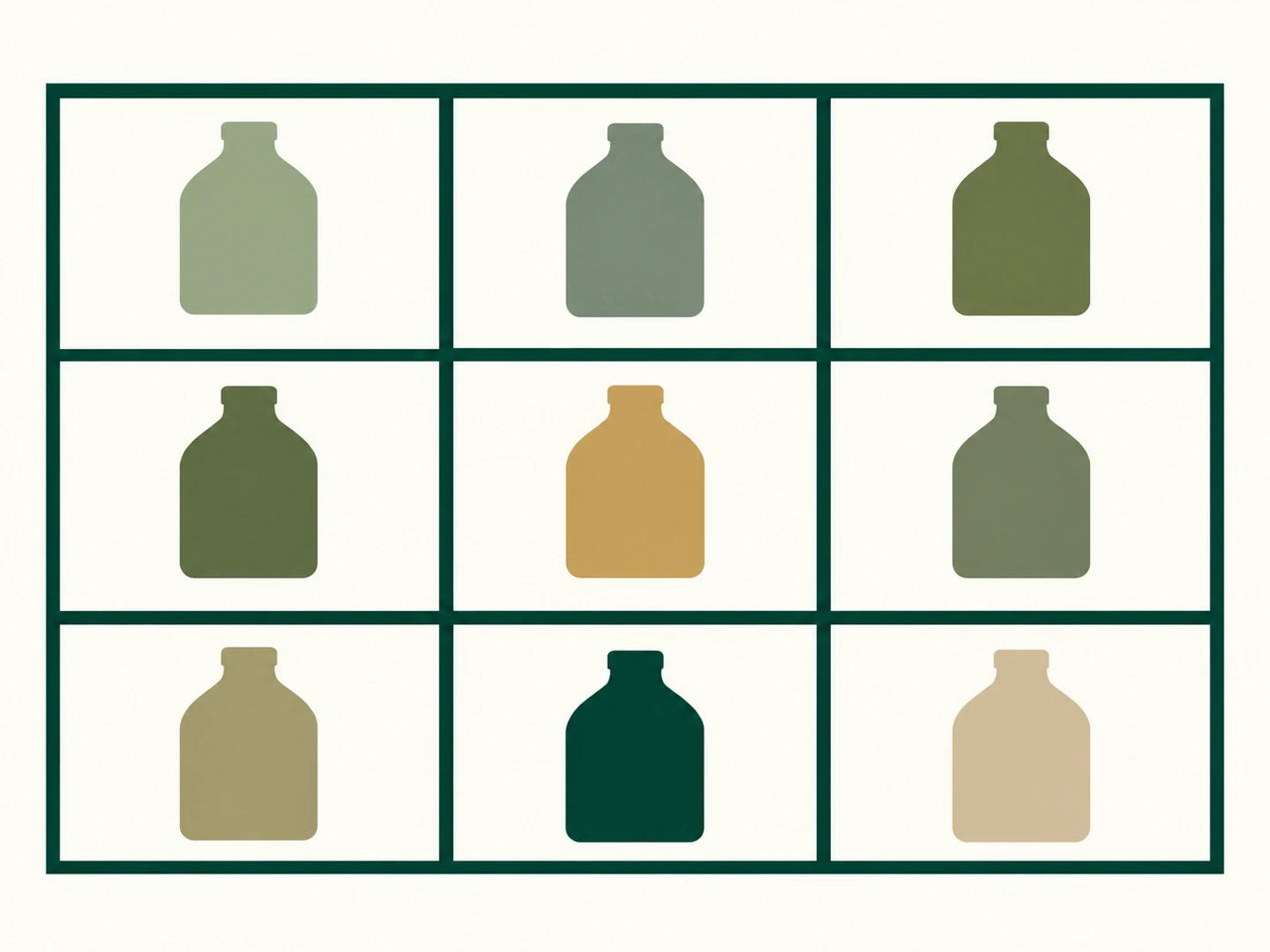
Look at the bottles in the illustration accompanying this article. They have slightly different shapes and colours, but they share the same visual language. Your product is the dark green bottle in the bottom-middle cell. Beyond its colour, how much distinguishes it from the others?
This is a useful test for your own visual library. If an image appeared beside several competitors, without your website, headline or supporting copy, what would it communicate about your brand?
A clear product image can explain shape, colour and design. Those are essential qualities. But a brand often stands for more: a particular approach to craftsmanship, a design philosophy, an attitude towards everyday life or a distinctive cultural world.
Some of that meaning can live inside the image itself. The choice of setting, materials, light, colour and composition can help a product feel recognisably connected to its brand, even when the surrounding presentation changes.
For brands, we see an opportunity to create visuals that carry more of their identity wherever they appear.
BIV - Brand Injected Visuals
At Scenes, we have developed an approach to producing these assets. We call it BIV - Brand Injected Visuals.
BIV translates a brand’s identity into deliberate visual choices around an accurately represented product. The setting and treatment are developed from what the brand stands for, so the image communicates both the product and the world it belongs to.
A logo can tell you who made something. The rest of the image should help explain why that matters.
For a design brand, this might mean a distinctive relationship between architecture, materials and light. For another brand, it could be precision, energy or warmth, expressed consistently across its visual content. The choices need to be specific enough to build recognition and flexible enough to work across different products and formats.
Both people and machines must be considered. People interpret visual signals through experience, association and emotion. AI systems can identify objects, details and visual relationships, but recognising a material or setting does not automatically mean understanding a brand’s positioning.
The ambition is therefore to make the visual signals clear and consistent, supported by accurate descriptions and product data. BIV is our creative response to this challenge; it does not guarantee that a search platform will select a particular image or improve its ranking.
There will still be a place for straightforward packshots, detailed product photography and images that serve a specific practical purpose. The broader library should also include visuals that can communicate more of the brand story independently.
For CMOs and content teams, this adds a question to the approval process: beyond showing the product beautifully, does this image communicate who we are?
A great product image has always needed to work within its intended context. Increasingly, it will also need to work when that context disappears.

Learn more about BIV at Scenes Lab
Talks, interviews and articles · Discuss what this means for your brand