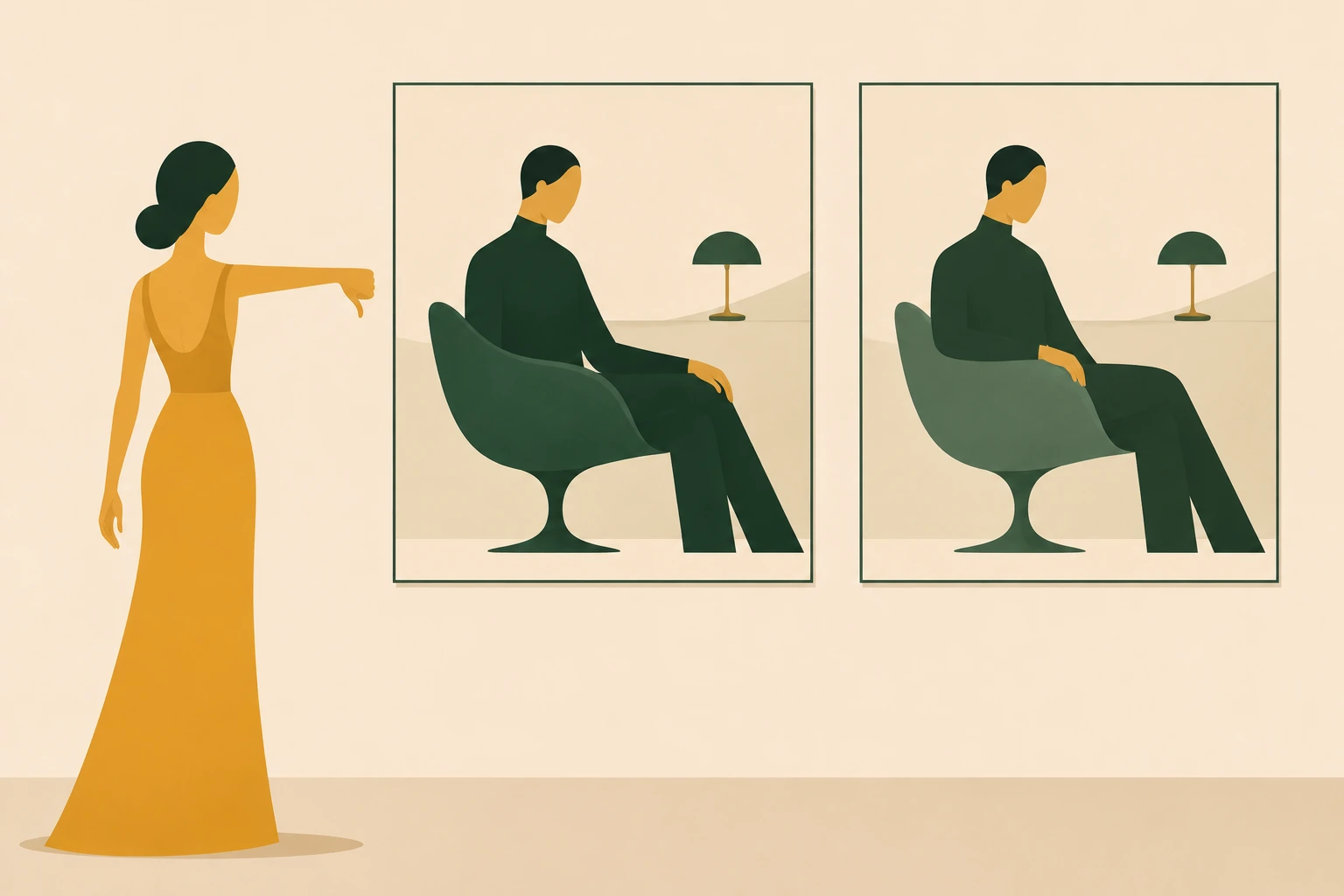
When a company announces, “We don’t use AI images. It’s company policy,” it sounds decisive. But before accepting that as a sensible business decision, it is worth asking what it is actually based on: a rigorous understanding of today’s opportunities and consequences, or a comfortable preference for the way things used to be?
There are entirely valid reasons to reject particular uses of AI. When a real person, a specific real place or a documented, lived experience is the core of the message, authenticity requires reality.
Yet rejecting an entire production method is a much larger decision, especially when that method is expanding what brands can imagine and create.
What are we actually protecting?
Authenticity is often the first argument raised against AI imagery. But commercial photography has always involved constructing a version of reality.
Having spent years developing and directing traditional shoots, I know the preparation required to make a photograph look effortless. The location, styling, lighting, expression and composition are carefully considered. The resulting image is then refined in post-production until it communicates what the brand needs.
That work is the craft. It is how we translate a commercial ambition into something people notice and feel.
A generated image has a different relationship with reality. A photographed person existed in front of the camera; a generated person may never have existed. That distinction matters when an individual’s actual identity, lived experience or endorsement is central to the communication.
However, a model in a lifestyle campaign is usually playing a role within a fictional situation staged for the brand. AI gives us a new way to build that context. Brands should consider both how an image was made and what the audience is being asked to believe. The production method alone cannot establish whether the communication is honest.
A policy should protect that integrity, rather than assume a camera automatically guarantees it.
Are we judging today’s possibilities by yesterday’s limitations?
When we founded Scenes three years ago, generating faces to the standard we needed for commercial work felt nearly impossible. We spent considerable time working around the limitations.
That early experience bears little resemblance to what we can achieve with professional tools today.
Yet discussions about AI imagery still often begin with the distorted faces, uncanny aesthetics and obvious mistakes people remember from its early stages. Those impressions can become company policy long after the possibilities have moved on.
Of course, poor work still exists. There are also amateurs who believe access to an image generator allows them to bypass the years required to develop visual judgment.
We would never assess the potential of traditional photography solely by looking at an amateur’s first snapshots. Brands should bring that same professional discernment to AI: examine accomplished work, understand how it was produced and judge whether it meets their standards.
A policy built on an outdated impression can quietly become a barrier to learning.
Does AI remove the need for an art director?
A common assumption is that easier access to image-making makes professional creative vision less necessary. Our experience at Scenes points in the opposite direction.
An image can be generated in seconds. A finished commercial image still takes hours of skilled work, guided by an experienced art director.
At Scenes, we spend many hours on each final image, making deliberate choices about composition, lighting, expression, atmosphere and product accuracy. Much of that work has shifted from behind a camera to a computer screen.
A plausible image is easy to accept if you don’t know what to look for. An experienced art director spots the expression that feels slightly false, the composition that undermines the product or the detail that makes a striking image feel out of character for the brand.
That judgment comes from years of experience and an understanding of commercial goals. As capable tools become widely available, I believe strong art direction will become even more valuable. Brands will increasingly need experienced creative leaders who can turn abundant possibilities into a distinctive, coherent body of work.
What does a blanket ban actually cost the brand?
The value of AI extends far beyond producing a single campaign more cheaply.
AI gives brands room to explore more ambitious ideas, create relevant variations for different markets and audiences, and develop visual concepts that would be difficult to justify on a traditional production budget.
This matters because a single, globally approved hero image rarely serves every audience and context equally well. A brand often needs the same creative idea to work across seasons, locations and customer situations. With expert direction, AI can help create those variations while preserving a recognisable identity.
The commercial value comes from making imagery more useful: closer to the customer’s context and more responsive to the market.
While a brand postpones experimentation, competitors can be learning how to create relevant variations, maintain consistency and commission the work effectively. That experience takes time to build.
A blanket ban excludes those possibilities before the team has even tested them.
Can choosing human production still be a rational decision?
Absolutely. A specific photographer’s perspective, a model’s performance or a genuine, unscripted encounter can be an essential part of the work. Brands may also consciously choose to invest in human craftsmanship because it aligns with their values and tells a meaningful story about who they are.
Those are clear, defensible creative and strategic choices.
Saying “We want this person’s creative contribution” identifies what creates value in the assignment. It allows the team to make a considered choice about how the work should be produced.
I see the future of brand imagery as a combination of approaches. Real products, real people and traditional photography will continue to matter. AI will expand how we develop ideas and create the world around them. Brands will benefit from developing the judgment to know where each approach serves them best.
What should brands do now?
For brands with concerns about consistency, ethics and reputation, my advice is to build experience through a clearly defined assignment.
- Build experience: Choose an assignment with a clear commercial purpose and a manageable scope.
- Empower experts: Give it to a team with strong art direction and a deep understanding of the brand.
- Assess the result: Review the finished work, the effort involved and the new creative possibilities it opens.
Keep your standards demanding. Expect accurate product representation, respect for people’s likenesses and honest communication. Then give your creative teams room to explore.
As AI becomes a standard part of commercial production, access to the tools will offer little distinction. The advantage will come from the creative judgment, brand understanding and experience applied to them.
Closing your eyes may preserve a familiar routine for a little longer, but it will not bring back the market that made that routine sufficient.
Talks, interviews and articles · Discuss what this means for your brand